
Welcome back to Reviews from the Aural Realms, a series from Other Worlds Than These where I explore music that moves me—emotionally, creatively, and sometimes even spiritually.
It’s been a little while since I’ve sat down for a full album deep-dive. The last was for one of my longtime favorites, Them by King Diamond —a theatrical descent into darkness and storytelling at its most intense.

Today, we shift atmospheres entirely. From haunted mansions and whispered voices, we rise into vast sonic horizons with Unfolding Skies by Craig Padilla & Marvin Allen—an album that promises space, openness, and the kind of expansive ambient journey that invites you to breathe a little deeper.
Discovery & First Impressions
I’ve been aware of Craig Padilla’s work for some time now. In fact, I have a few of his tracks saved—“Woven Planet” being one I return to often. There’s a certain immersive quality in his sound design that draws you in and holds you there. That said, I’ll admit I still need to explore more of his catalog in depth.
Marvin Allen, on the other hand, is newer to me. Through mutual connections we recently began following each other and chatting, which added an interesting layer to approaching this review. During one of our conversations—before I had even looked at liner notes or promotional material—I asked him what his specific contributions were on this release.
(And I should pause here to mention something important about how I approach reviews: I almost always begin by listening blind. No press materials. No credits. No preconceptions. I want my first impressions to be shaped purely by the sound itself. Only afterward do I circle back and fill in the details.)
Marvin’s response was refreshingly straightforward:
“Just guitar on this one 🙂 I used some slide and E-bow here and there along with a liberal amount of Strymon effects and some phase shifter via an original Uni-Vibe pedal, ala Hendrix and Trower 😊🎸”
What’s fascinating is that this exchange happened after I had already begun listening to the first track. Knowing that context—and hearing how the guitar textures were being shaped through effects and improvisation—added a new dimension to what I was already experiencing.
About the Album
Released through Spotted Peccary Music, Unfolding Skies marks the fourth collaboration between Craig Padilla and Marvin Allen. This time, they push beyond pure ambience into something more kinetic—an electronic, post-rock-leaning sound that pulses, shimmers, and stretches outward like the cosmic imagery it evokes.
Much of the album grows from live studio improvisation. You can feel that organic exchange—the sense of two musicians listening and responding in real time. Allen’s guitar sits front and center here, not as ornamentation, but as a traveler moving through Padilla’s electronic landscapes. At times it recalls classic rock, prog, even a bit of cinematic sweep—but it never feels nostalgic. It feels exploratory.
Tracks like “Framework,” “Undercurrents of Change,” and the expansive “Architects of Time” showcase that dynamic interplay: swirling synths, driving rhythms, and guitar lines that cut, soar, and occasionally blaze.
There’s also a thematic throughline carried over from their previous collaborations—the Umbrella Girl, a symbol of navigating chaos and finding direction. On Unfolding Skies, that journey feels brighter and more forward-moving, like stepping into clarity after a storm.
Track-by-Track Reflections
🌀 Some of the songs featured below are part of the official Reviews from the Aural Realms Playlist on Spotify. Dive in and listen along.
1.Framework
Framework opens with a wash of ambient guitar suspended over a subdued metallic texture in the background. That subtle industrial shimmer immediately caught my ear. I’m admittedly a fan of that kind of metallic atmosphere—I use Native Instruments’ Kinetic Metal in my own music quite a bit—so hearing what sounds similar here felt like a familiar language. If I had one tiny personal note, it’s that I almost wished that metallic undercurrent lingered a little longer before fading. A very minor preference… but worth mentioning.
Around the 1:20 mark, the guitar begins to bloom—possibly E-bow driven—stretching notes into something more expressive and human. It’s restrained at first, hovering over the soundscape, before a more defined arpeggiated rhythm begins to emerge around 2:20. From there, the track commits to a slow, deliberate build. And I love that. There’s patience here. No rush to the payoff—just layers unfolding naturally.
By the time percussion enters around 3:19, the atmosphere shifts. Now it’s no longer just ambient—it’s driving. It’s pulsing. And suddenly that unmistakable early 80s Tangerine Dream energy starts to surface. When Marvin’s guitar steps forward, it doesn’t just nod to that era—it embraces it. In the best possible way. There’s a soaring, cinematic quality that feels straight out of the Edgar Froese playbook, yet still modern and alive.
As luck would have it, I happened to be online while listening and poked Marvin about whether that classic Berlin School influence was intentional. His response:
“I love Edgar’s work and tend to fall in that direction when I’m accompanying Craig who has a huge Tangerine Dream influence. Outside of that I was very much paying tribute to another of my heroes Robin Trower 😊🎸”
That makes perfect sense. You can hear it—the reverence without imitation. It feels less like nostalgia and more like lineage.
If someone were to reinterpret the sonic aesthetic of The Thief soundtrack today, this track might be what it sounds like.
At 6:12, there’s a sudden breakdown. The rhythm drops away, leaving soft guitar and arpeggio breathing in open space. It’s a reset moment—almost meditative—before the gradual climb resumes. And when it does, it’s riding music. Open road. Night sky. Forward motion.
By the 7:30 mark, the layers return with strength, building toward a full-throttle resurgence just before 8 minutes in. A subtle half-note sequence floats above everything—almost steel-drum-like in tone, but not quite—adding texture without overpowering the core pulse.
As the track approaches the 10-minute mark, it begins its descent. The intensity peels back, revealing a soft, underlying arpeggio and gentle Berlin-school textures. The guitar echoes out over the fading electronics, and the entire piece winds down in a graceful, unhurried exhale.
Aside from my personal preference about the early metallic fade, this is an outstanding opener. It establishes mood, momentum, and identity in one expansive gesture.
So let me say it clearly: I really, really like this track.
2. Undercurrents of Change
Where Framework gradually ignites, “Undercurrents of Change” begins with a softer touch. A clean, expressive guitar line floats over ambient pads—measured, patient, and understated. It feels reflective from the start, like watching distant clouds gather before realizing a shift is underway.
A subtle shaker rhythm begins to weave its way in, adding gentle propulsion without disrupting the calm. It’s not a heavy-handed beat—more like a current moving beneath the surface, quietly pushing everything forward. As the track progresses, a lead synth begins to rise, and the background arpeggios slowly move closer to the front of the mix. The layering here is thoughtful; nothing rushes, nothing feels forced.
Between the 1:30 and 2:13 mark, the buildup becomes especially compelling. The elements stack in a way that feels natural and cohesive, and just when the momentum feels ready to crest, there’s a small pullback around 2:30. The percussion recedes, leaving guitar and a few arpeggios to breathe. It’s a brief reset—a moment of recalibration—before the rhythm eases back in and carries the melody forward once again.
Around 3:15, the guitar truly steps into its own. This is where the track leans heavily into that classic Tangerine Dream lineage, and I couldn’t help but think of the Underwater Sunlight era—particularly the Paul Haslinger days. There’s that unmistakable blend of atmospheric electronics and melodic guitar that defined a certain chapter of TD’s evolution. And here, it’s not imitation—it’s influence filtered through Padilla and Allen’s own creative language.
The lead saw synth that enters later is particularly striking—lush, wide, and almost reminiscent of a CS-80 tone. It glides over the rhythmic foundation with confidence, adding a cinematic sheen to the entire piece. Combined with the layered guitar textures, it creates a soundscape that feels both nostalgic and immediate.
Unlike the long, dissolving fade of Framework, this track chooses a different ending. There’s no extended drift into silence—just a smooth, decisive stop. It’s clean, intentional, and fitting for a track built around momentum and transition.
“Undercurrents of Change” lives up to its name. It doesn’t explode—it evolves. And in doing so, it becomes another strong statement in an album that understands the power of subtle shifts and layered progression.
3. Sun Portal
“Sun Portal” opens in a wash of ambient pads—wide, warm, and inviting. There’s a soft lead line that feels almost weightless, drifting across the surface before anything firmly takes shape. It’s a gentle entry point, like stepping through light rather than bursting into it.
Gradually, a bass line begins to emerge. It doesn’t rush forward; it settles in, grounding the atmosphere with a steady, confident pulse. When that low-end thump fully arrives, it gives the track a heartbeat. Pads and ambient guitar hover above it, creating that layered Padilla/Allen texture where nothing competes—everything complements.
Around the 1:50 mark, a Berlin-style arpeggio slips into the background. It’s subtle at first, but it slowly begins to build, adding motion beneath the otherwise spacious mix. This is where the track takes on a more cinematic quality. For me, it evoked strong Gunslinger-era vibes—something expansive, reflective, and just slightly haunted. There’s a sense of forward movement, like crossing vast terrain under a burning sky.
Just before the three-minute mark, the ambient guitar returns with more presence, and by 3:15 the track shifts into full gear. The mix throughout the album has been excellent, and here it really shines—each element sits in its own space while contributing to a cohesive whole.
At the four-minute mark, the energy rises another level. A softer lead enters—almost whistle-like, slightly ghostly—floating above the rhythmic engine beneath it. It adds a spectral quality to the piece, as if something unseen is guiding the journey.
By 5:20, the track begins its descent. The intensity tapers off gradually, peeling back layers without abruptness. It doesn’t collapse—it recedes. What’s left is a smooth fade, like watching the sun dip below the horizon after the portal has closed.
Really, really strong track. “Sun Portal” balances atmosphere and propulsion beautifully, adding another dimension to an album that continues to unfold with intention and care.
4. Jammin' with Buddha
“Jammin’ with Buddha” begins with a spacey, descending arpeggio that immediately sets a different tone from what came before. It feels more introspective—less expansive sky, more inward drift. A clean guitar line threads its way through the texture, steady and restrained.
One element that really grabbed me early on is the sharp, almost pizzicato-style synth arpeggio dancing through the mix. It’s crisp and precise, giving the track a slightly angular edge against the more fluid pads beneath it. I genuinely liked that texture—it adds personality and keeps the piece from settling too comfortably into ambient territory.
Around the 1:20 mark, those sharper tones soften and recede as broader, more commanding pads take over. The track shifts from intricate to immersive. This is where my mind started making its own strange associations. I was reminded of Stratosfear-era Tangerine Dream, and oddly enough, flashes of 3AM at the Border of the Marsh from Okeefenokee.
Now, if you go back and try to map this track directly onto those songs, the parallels may not be obvious. It’s not a note-for-note reference. It’s more about atmosphere—about that particular blend of analog shimmer, exploratory arpeggios, and guitar phrasing that defined a certain era of electronic music. Funny how the mind connects dots like that.
Just before the 2:40 mark, crystalline arpeggios glint in the mix before the guitar lead steps forward with more authority. It doesn’t blaze like in previous tracks; instead, it glides—melodic, expressive, but slightly more restrained. The interplay between guitar and synth continues to be the defining strength of this collaboration.
That said, while I do enjoy this track, it doesn’t hit me quite as strongly as the first three. It’s solid, thoughtfully arranged, and rich in texture—but for me, it feels more like a reflective interlude than a standout centerpiece. Still, even as a quieter chapter, it contributes meaningfully to the album’s overall arc.
And sometimes that’s the role a track is meant to play—not the loudest statement, but part of the journey nonetheless.
5. Cosmic Blueprint
“Cosmic Blueprint” begins in near stillness—grand, expansive pads stretching outward while light ambient guitar hovers above them. It’s spacious without feeling empty, like staring into deep sky before the constellations start to reveal themselves.
Around the one-minute mark, the track begins to open up. There’s still that improvisational looseness in the phrasing, but the layers start to assert themselves with more confidence. The pads swell and slowly take center stage, creating a rich, immersive wash of sound.
At 1:50, there’s a beautiful segue—one of those transitions that doesn’t announce itself but simply happens. The next minute or so is divine. Everything feels balanced, deliberate, and emotionally resonant without being dramatic. It’s patient music, but not passive.
By 3:30, the tone darkens slightly. Ghostly, whispering pads move through the mix while a harsher-edged guitar texture simmers underneath. It adds tension without overwhelming the atmosphere. Then, just after the four-minute mark, comes a transition that genuinely made me sit up a bit—smooth but impactful, like stepping into a different light.
When the distorted guitar enters more fully, it adds a surge of character and momentum. And at the five-minute mark, when everything swells back in together… that’s the moment. I love that section. The convergence of layers, rhythm, and melodic lead feels earned and exhilarating at the same time. This one is absolutely going onto my playlist.
After six minutes, the arpeggios and guitar begin to stir again, intertwining in a way that feels cinematic and forward-driving. I’ve mentioned it before in this review, but I’ll say it again—if someone reimagined the Thief soundtrack today, this is the kind of sound I’d expect to hear. There’s that blend of Berlin School propulsion and guitar-led intensity that scratches a very specific musical itch for me.
It even carries a bit of that “Doctor Destructo” vibe—strong, bold, confident electronic energy with personality.
By the end, one word lingers: bliss.
6. Architects of Time
“Architects of Time” opens with a familiar pairing—an arpeggio laying the foundation while clean guitar traces melodic lines above it. It’s a strong sonic signature for this collaboration, and by this point in the album it feels intentional, almost like a thematic callback.
Coming straight off the high of “Cosmic Blueprint,” though, the opening here doesn’t hit quite as immediately for me. That’s not a knock on the song itself—it’s more about sequencing and emotional momentum. After such a powerful swell in the previous track, this one feels like it asks you to reset before building again. Personally, I might experiment with the play order in my own listening sessions just to see how that shift changes the impact.
As we move just beyond the 1:10 mark, the piece begins to gather strength. A supporting arpeggio enters more clearly, and the guitar lines gain confidence. The layering becomes richer, and that signature blend of classic 80s Berlin School atmosphere with a modern production polish comes forward once again. This entire album has that quality—nostalgic without sounding dated—and I genuinely love that about it.
At around 2:00, the guitar lead steps into the spotlight. It’s expressive and melodic, but still patient. Then, near 2:50, the tonal structure of the arpeggios shifts subtly, creating a new harmonic bed. Just after 3:00, rhythm kicks in—and that’s where things really begin to click for me. The guitar lead that follows is sublime. Confident. Expansive. Alive.
This is where I found myself thinking: I’d love to hear a radio edit or alternate mix of this track that dives into that energy right from the beginning. Don’t get me wrong—I appreciate the slow builds. That’s part of what makes this style of music so immersive. But coming immediately after “Cosmic Blueprint,” an earlier ignition point might have amplified the transition even more.
From there, the track continues to rise, layering rhythm, arpeggios, and lead guitar into a steady ascent. By the time we approach the 5:15 mark, we reach the climax—a satisfying crest that feels earned. The fade-out that follows is smooth and measured, letting the energy dissipate naturally rather than cutting it short.
While it may not have grabbed me instantly at the outset, “Architects of Time” ultimately grows into something powerful and memorable. It’s another strong entry in an album that consistently balances atmosphere, propulsion, and expressive guitar work.
7. Unfolding Skies
And now we arrive at the title track—“Unfolding Skies.”
It opens with bright, shimmering arpeggios weaving through expansive pads, immediately establishing that classic Berlin School atmosphere. Then, just before the 30-second mark, everything drops away, leaving a single, lovely arpeggio exposed. I love moments like that—when the track briefly inhales before expanding again.
By 1:20, the buildup begins in earnest. Layers start stacking, sequences gain clarity, and that unmistakable Berlin School pulse comes into focus. Electric ambient guitar glides over the top, never overpowering, always conversing with the electronics rather than competing with them.
As the longest track on the album (with “Framework” close behind), this one feels like it’s designed to stretch out and fully explore the sonic terrain Padilla and Allen have been building toward.
At 2:35, there’s a smooth, flowing transition into a more energized phase. The track feels more charged here—momentum gathering without losing that sense of space. By 3:24, we’re in full-on Berlin School bliss. Sequencers are driving, guitar lines are soaring, and everything locks into place.
There’s even a subtle Risky Business / Dream Is Always the Same vibe in the atmosphere—propulsive but restrained. This is phenomenal “working” focus music. It builds power and intensity without yanking you out of your concentration. It moves you forward rather than distracting you.
After the five-minute mark, additional guitar leads begin to flow more prominently. Throughout this entire album, I’ve consistently loved Craig’s sequencing work paired with Marvin’s expressive guitar phrasing. That interplay is the heart of this project. Neither element overshadows the other—they rise and fall together.
There’s also something about this track that feels like a “final quest” moment. It carries that cinematic sense of culmination—the last ascent, the final stretch before resolution. It’s strong, uplifting, expansive.
Leading up to the eight-minute mark and beyond, there’s a wonderful sense of freedom in the progression. It feels open, unrestrained—like cresting above cloud cover.
Around nine minutes in, the energy begins to gently recede. Layers peel back. The tone shifts toward a more mellow, late-70s analog warmth before the clean guitar re-emerges with clarity. The transition into this final phase is handled beautifully.
And what I especially love is how the piece becomes progressively less in its closing moments. Not abrupt. Not dramatic. Just a natural, graceful unwinding. It’s a perfect coda to both the track and the album as a whole.
A strong addition to the playlist—and a fitting close to a journey that balances nostalgia, propulsion, and modern polish in equal measure.
Final Thoughts
There’s something about Unfolding Skies that hits a very specific place in my musical soul.
It carries that late-70s / early-80s electronic spirit—the Berlin School pulse, the analog shimmer, the cinematic sequencing—but it never feels like a retro exercise. This isn’t imitation. It’s evolution. It’s that classic foundation filtered through modern production, modern tone shaping, and a contemporary sense of pacing.
And that combination is fantastic.
Throughout this album, the interplay between Craig Padilla’s sequencing and electronic architecture and Marvin Allen’s expressive, textural guitar work feels natural and unforced. The guitar doesn’t sit “on top” of the electronics—it lives inside them. It explores them. It responds to them. At times it soars; at others it simply breathes.
That balance is what makes this collaboration work so well.
If I’m being completely honest, this album also left me with a slight sense of regret—not about the music itself, but about the fact that I’ve clearly been missing out on their previous collaborations. I was already familiar with Craig’s work. I’ve had tracks like “Woven Planet” floating through my playlists for years. They would pass by, and I’d think, Man, I love this. But I never truly sat down and gave his catalog the focused attention it deserves.
And Marvin? While newer to me, his guitar voice on this album has absolutely earned my attention moving forward.
So now I have homework.
I need to go back. I need to explore their previous releases together. I need to dive deeper into Craig’s broader body of work. Because if Unfolding Skies is any indication of what this partnership consistently delivers, then there’s a lot of musical territory I’ve yet to fully experience.
This album feels like sunlight breaking through cloud cover. Like motion. Like clarity after noise.
And that’s the best compliment I can give it.
Highly recommended—especially if you, like me, have a deep love for classic electronic music but want to hear it brought forward with energy, emotion, and modern depth.
About the Artists


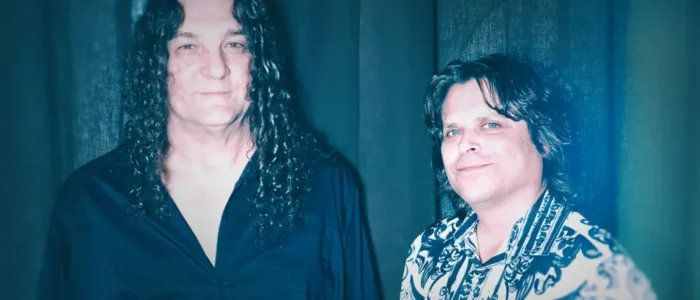

Craig Padilla and Marvin Allen are an internationally recognized electronic ambient-rock duo based in Northern California, known for blending expressive musicianship with expansive, cinematic sound design.
Craig Padilla is a longtime fixture in the electronic music world, with more than 40 releases to his name. Over the decades, he has developed a signature approach that merges analog warmth with digital precision, crafting immersive soundscapes that feel both timeless and forward-thinking. His sequencing work and atmospheric layering are hallmarks of a composer deeply fluent in the language of classic electronic music, yet unafraid to evolve it.
Marvin Allen brings an equally rich background to the partnership. A seasoned multi-instrumentalist, performer, and educator, he draws from decades of experience in recording, film scoring, and mentoring young musicians. His guitar work—textural, melodic, and often soaring—adds an organic, human voice to Padilla’s electronic environments. The result is a dynamic interplay between circuitry and strings, structure and spontaneity.
Together, Padilla and Allen have earned international acclaim. Their collaborative releases—issued through the renowned Spotted Peccary Music label, including titles on the respected Hemi-Sync imprint—have reached #1 on the NACC charts for multiple weeks. Their music has been commissioned by the iconic Star’s End Radio and featured on SiriusXM, as well as nationally syndicated programs such as Echoes and Music from the Hearts of Space, alongside numerous other radio broadcasts and podcasts worldwide.
In short, this is a duo whose work doesn’t simply live within the electronic and ambient-rock traditions—it actively contributes to their ongoing evolution.
✨ Want Your Music Reviewed? ✨
Reviews from the Aural Realms is all about spotlighting music that deserves to be heard. If you’re an artist who’d like to see your music featured in a future review, I also offer detailed review services on Fiverr — including promo clips for social media.