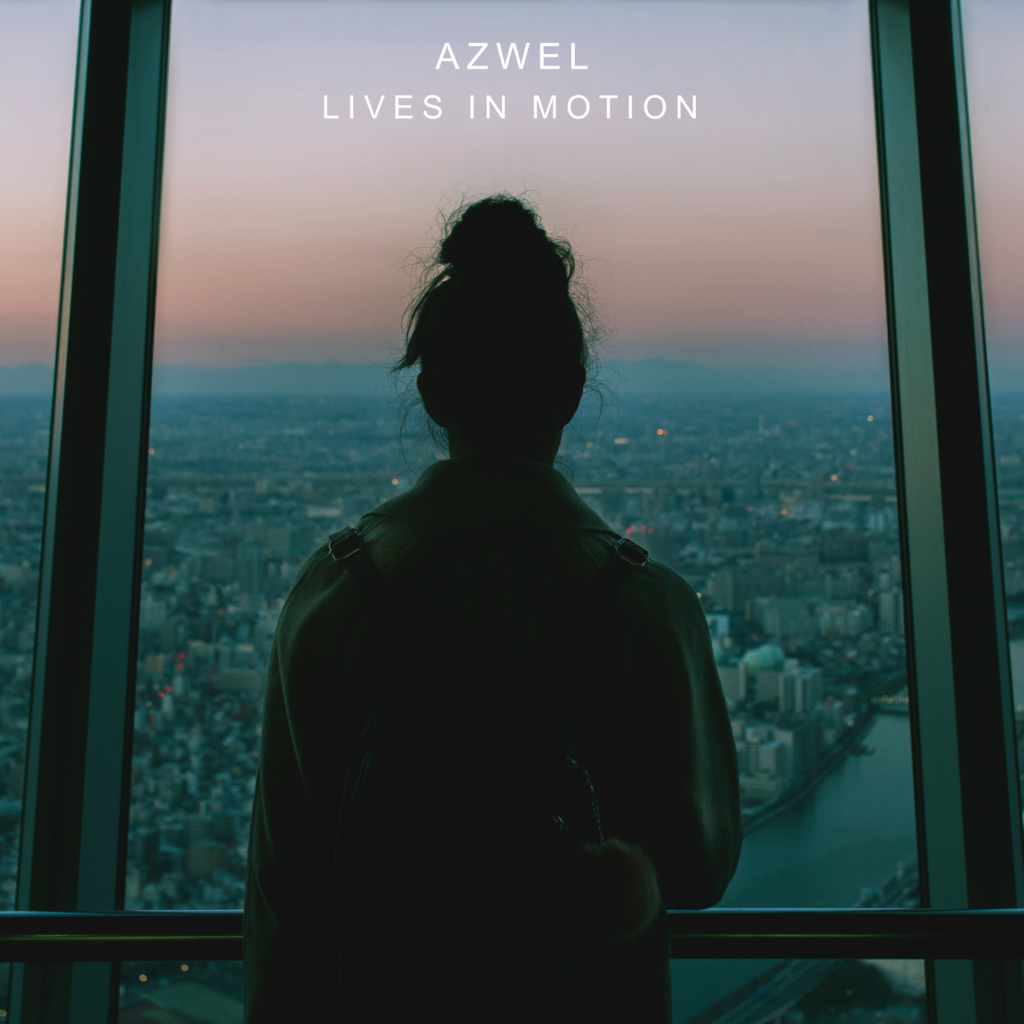
Lives in Motion by Azwel
Welcome back to Reviews from the Aural Realms, a series from Other Worlds Than These where I share music and artists that resonate deeply with me—sonically, spiritually, and creatively.
In my last review, I explored Another Day and Footsteps by Rosewood Boulevard.
This time around, we are reviewing Lives in Motion by Azwel.
Discovery & First Impressions
One of the things that immediately intrigued me about Lives in Motion was its premise.
Rather than centering the album around his own experiences, songwriter Jason Perrillo instead builds an entirely fictional world—an imagined town populated by interconnected lives, each song introducing a different character, place, or event. It’s a concept that feels more like the framework for a film than a traditional collection of songs, with each track revealing another piece of the larger picture.
Jason mentioned that the melodies themselves began to feel cinematic as he was writing them, and instead of fighting that instinct, he embraced it. Rather than turning inward with autobiographical lyrics, he chose to tell stories through fictional characters, allowing the music and narrative to grow together. As someone who spends a great deal of time building fictional worlds through my own music and storytelling, that approach immediately resonated with me.
Lives in Motion also marks Jason’s eighteenth release under the Azwel name—a testament to both his dedication and his continued desire to evolve as a songwriter. After more than two years since the previous album, this feels less like a return and more like the beginning of a new chapter.
Musically, the album blends indie pop, chamber pop, Britpop, and rock, while incorporating rich string arrangements, piano, layered guitars, and atmospheric production. But perhaps what interested me most wasn’t simply the instrumentation—it was Jason’s intention.
He describes Lives in Motion as an album designed to be experienced from beginning to end.
In an age where so much music is consumed one song at a time, that’s a refreshing philosophy. I’ve always believed that some albums are more than a playlist of individual tracks—they’re journeys. They ask you to set aside forty or fifty minutes, press play, and allow yourself to be carried from one destination to the next.
As I prepared to listen, one question stayed in the back of my mind:
Would these songs simply tell fifteen individual stories… or would they gradually reveal the larger story of the town itself?
There was only one way to find out.
Track-by-Track Reflections
Some of the songs featured below will be part of the official Reviews from the Aural Realms Playlist on Spotify. Dive in and listen along.
1. Start of the Story
The album opens with a wonderfully inviting guitar arpeggio before the vocals enter, and almost immediately I’m hearing the bright melodic character of classic Britpop. There’s a lightness and energy to the arrangement that feels warm, upbeat, and welcoming—an interesting way to introduce an album built around a larger interconnected story.
One thing I should mention before diving into the lyrics throughout this review: any interpretations I make are simply my own. They’re based on what I hear in the words and how I think they fit into the album’s larger narrative, but they may be completely different from Jason’s original intent. That’s part of what I enjoy about music—sometimes a song tells a different story to every listener.
When I review music, I also prefer to begin without reading the lyrics or promotional material. I want to experience the songs as naturally as possible and discover what reaches me through the music alone. On this first listen, the melody and atmosphere came through immediately, although I found some of the lyrics difficult to make out in the mix. The song itself sounds fantastic, but with a concept-driven album like Lives in Motion, having the lyrics certainly helped me appreciate the story being told.
Lyrically, the song introduces someone who feels trapped in a familiar cycle of strain, confusion, and disappointment. There is a sense that they have been through this before and recognize the pattern, even if they still struggle to understand the people or circumstances around them.
Musically, though, it’s surprisingly uplifting. That contrast between the bright Britpop-inspired arrangement and the more reflective lyrical themes gives the song a depth that wasn’t immediately apparent on my first listen.
As an opener, “Start of the Story” does exactly what its title promises. It welcomes us into Jason’s imagined world, introduces us to our first perspective, and leaves us eager to discover where the rest of the story leads.
2. In Defense of These Two
Another strong introduction here. One thing I’m noticing very quickly about Lives in Motion is that these songs carry a familiar sense of genre without ever feeling derivative. There are touches of Britpop, chamber pop, and classic melodic rock throughout, but the songs still feel wholly individual—recognizable in style, yet clearly their own.
The arrangement moves with a natural confidence, and the vocal delivery continues to stand out. I especially love the way the word “away” is sung around the 1:44 mark and again near two minutes. It’s a small detail, but it fits the emotional shape of the song perfectly. Sometimes a single word, delivered the right way, can carry more weight than an entire verse.
My interpretation of the lyrics is that the song reflects on Anna and Peter from the perspective of someone defending, remembering, or perhaps mourning them. Both seem to have faced difficult circumstances in different ways, yet the narrator views them with sympathy and respect. By the end, the mention of their graves gives the song a much heavier emotional weight than the music initially suggests.
That contrast works especially well. The song remains melodic and approachable, but beneath it is a story of distance, hardship, loyalty, and loss. It also feels like the album is beginning to introduce us more directly to the people who inhabit its fictional world—not simply as characters, but as individuals whose lives have already left an impact on those around them.
“In Defense of These Two” is another strong track, and more importantly, it begins widening the scope of the story. We’re no longer standing at the entrance. We’re starting to meet the people who live inside it.
3. The Life She Promised
The album slows down here, and the change in pace is welcome. “The Life She Promised” introduces a female vocalist and unfolds as a duet, giving the song a different emotional texture from the first two tracks.
I really like everything about this one—the vocals, the way the two voices complement each other, and the arrangement surrounding them. There is a gentleness to the song, but it never feels slight. Instead, it feels carefully measured, allowing the story and the emotion to settle in naturally.
This was also the point where I realized I would need to listen through Lives in Motion more than once. On my first pass, I kept finding myself getting wrapped up in the music and simply wanting to enjoy it rather than stop and analyze every detail. So I took a few notes, let the album carry me, and returned for a second listen.
And on that second listen, I liked this song even more.
My interpretation is that the lyrics follow a woman who comes from hardship and instability, leaves in search of something better, and slowly builds the life she once imagined. The return to Westrand near the end feels especially meaningful, as though she has come back changed—not defeated by where she began, but carrying proof that she made it through.
There is sadness in the repeated sense of missing someone, but there is also hope, determination, and a feeling of homecoming. The duet format strengthens that emotional pull, making the song feel less like a solitary reflection and more like two lives meeting across distance and time.
“The Life She Promised” is an early standout for me. It broadens the world of the album, introduces another life within the town, and does so with warmth, patience, and a beautifully handled sense of resolution.
4. Low Tide Temptation
This one immediately caught my attention because it moves into a noticeably different musical space. I hear a slight Bossa Nova influence in the rhythm and arrangement, although I wouldn’t call it purely that. Genre labels are usually only a close approximation anyway, and this track seems more interested in borrowing the feel of that style than fitting neatly inside it.
I like the song, although it doesn’t connect with me quite as strongly as the first three tracks. That isn’t a criticism of the musicianship or arrangement—both are handled very well. It’s simply a matter of personal response. The earlier songs grabbed me more emotionally, while this one feels like a change in scenery within the larger journey.
And I have a great deal of respect for how Jason is pulling all of this together. Moving between different musical styles while maintaining the album’s identity is not an easy thing to accomplish, especially within a concept-driven release.
My interpretation of the lyrics is that they present the river, harbor, forest, and shoreline as places of temptation and possible danger. The narrator seems to warn someone away while also offering escape, forgiveness, and freedom from ordinary rules. That contradiction gives the song a slightly unsettling quality: is this genuine concern, manipulation, or an invitation to surrender?
The coastal imagery adds another location to the album’s fictional world, but it also suggests that beneath the calm surface of this town, there are secrets, risks, and choices capable of pulling its residents into something much darker.
While “Low Tide Temptation” may not be one of my personal standouts so far, it is thoughtfully arranged and serves an important purpose by widening both the musical palette and the geography of Lives in Motion.
5. Nifty Fifty
The vocals sit a little more prominently in the mix on “Nifty Fifty,” and that immediately helps the song stand out. There’s a directness to the delivery that works well with the upbeat arrangement, and overall, this one connected with me much more quickly.
I like this track quite a bit. In fact, I’m almost certain it’s going onto one of the OWTT playlists.
One thing that continues to stand out across Lives in Motion is how bright and energetic many of these songs feel, even when the lyrics suggest something more complicated beneath the surface. On my first listen, I was drawn primarily to the melody, rhythm, and vocal delivery. I’m hoping that during my second pass, I’ll be able to pick out more of the lyrical detail naturally now that I know what to listen for.
The ending also caught my attention. Much like the previous track, it closes with that humming, almost “ba-da-dum-dum” refrain. It creates a small musical connection between the songs and makes me wonder whether that recurring phrase is simply stylistic or part of the album’s larger narrative structure.
My interpretation of the lyrics is that the song follows someone consumed by money, profit, and the need to be seen succeeding. There’s confidence and bragging on the surface, but also a sense of loneliness underneath it all. The narrator may be winning financially, yet still seems to need validation and someone to keep them from falling apart.
That contrast gives the song an interesting edge. It sounds playful and energetic, but the story behind it feels more cynical—possibly even tragic.
“Nifty Fifty” is catchy, memorable, and one of the stronger tracks for me so far. It expands the album’s world by introducing another character whose ambitions may be carrying them forward while quietly costing them something more important.
6. Railway East
“Railway East” shifts into a slightly jazzier space, and I really like the change. There’s something relaxed and stylish about the arrangement—the kind of song I could imagine hearing in a dimly lit lounge while sitting back with a drink and simply letting the music carry the room.
The second verse especially caught my attention because the vocal takes on that filtered, almost radio-like quality. It could just as easily be compared to the sound of an old telephone receiver, and whatever the exact effect is, it works beautifully. It gives that section a sense of distance, as though the voice is arriving from somewhere else—another room, another time, or perhaps another part of the town altogether.
Musically, this one connected with me quickly. The tone, the pacing, and that vocal treatment all give it a personality that stands apart from the previous tracks while still fitting naturally into the album.
My interpretation of the lyrics is that the song follows a group being pushed outward—possibly displaced, rejected, or forced to leave after something has gone wrong. The repeated reference to Railway East feels less like a destination of choice and more like somewhere they end up when there is nowhere else left to go. There’s also a sense of loyalty within the group, even as blame, injury, and self-preservation begin to surface.
That ambiguity suits the song. It feels smooth and composed on the surface, but underneath it is a story of instability, consequences, and people trying to stay together while everything around them shifts.
Oh yeah—I like this one.
7. Wishing Well
Mmmm… I like this one.
One thing I noticed on my second listen through the album is just how much having the lyrics in front of me enhances the experience. On my first pass, I intentionally listen “cold,” letting the music speak first and allowing the melodies and arrangements to make their initial impression. Coming back with the lyrics in hand helps reveal another layer of the story that I may have missed the first time around.
Musically, “Wishing Well” continues the album’s strong melodic writing. Around the two-minute mark, there’s a wonderful counter melody played on what sounds like an electric piano that immediately caught my attention. It’s subtle enough not to draw attention away from the vocals, yet it adds another beautiful layer to the arrangement. Then comes the guitar solo, using a lightly muted distortion that fits the song perfectly. It’s expressive without becoming overpowering—a tasteful solo that serves the song rather than stealing the spotlight.
My interpretation of the lyrics is that they center around someone who has become almost mythical within the town. The repeated references to the wishing well suggest a place where hope, expectation, and perhaps even reputation intersect. The narrator seems fascinated by this person, while also acknowledging that others perceive them very differently. Whether the blessing comes from the wishing well itself or simply from the choices they’ve made is left open to interpretation.
That uncertainty is part of the song’s charm. Like a real wishing well, people often bring their own hopes and expectations with them, and perhaps that’s exactly what this song is inviting us to do.
By this point in the album, I’m beginning to appreciate how Jason is introducing not only different characters, but also the places that define this fictional town. The wishing well feels less like a backdrop and more like another resident of the story—a landmark that quietly connects the lives unfolding around it.
Another excellent track, and one that continues to pull me further into the world of Lives in Motion.
8. Two Wrongs Don't Make a Right
“Two Wrongs Don’t Make a Right” picks the energy back up after the more reflective tone of “Wishing Well.” Like much of Lives in Motion, it carries an upbeat momentum that makes the album such an enjoyable listen. Even when the stories themselves explore more difficult emotions, the music continues to move forward with confidence and optimism.
I enjoyed this one from the start, but it was the repeated message I thought I was hearing that stayed with me the most.
Unfortunately, I didn’t have the official lyrics available for this track, so what follows is simply my interpretation from listening.
What I kept hearing was a conversation between two people who both long for something better—not just better circumstances, but better versions of themselves. Phrases like “I long for better days,” “I need a better view,” and the recurring feeling of simply telling someone to “be there” gave me the impression of two people trying to hold one another together while also recognizing that something has to change.
Perhaps they’re encouraging one another. Perhaps they’re enabling each other’s shortcomings. Or perhaps they’re simply trying to navigate life together one day at a time.
Without the official lyrics, I can’t say for certain.
What I can say is that the song conveys a strong sense of presence. The repeated feeling of asking someone if they’re happy and encouraging them to simply be there resonated with me, regardless of whether I caught every word correctly.
Musically, one of my favorite moments comes right at the end. The soft string outro is beautifully done, providing a gentle landing after the song’s steady energy. It’s a small touch, but one that leaves the track with a sense of warmth and reflection.
Whether my interpretation of the lyrics is close or completely off the mark, “Two Wrongs Don’t Make a Right” succeeds in something equally important: it made me want to listen again. And for a concept album built around revisiting its stories, that’s exactly the kind of response I hope for.
9. This is War
One thing I can say after reaching this point in Lives in Motion is that I genuinely like everything I’ve heard so far. Every song has brought something different to the table, yet none of them feel out of place. Jason has done an excellent job of allowing each track to have its own personality while still serving the larger narrative.
Musically, “This is War” strips things back considerably. The arrangement is much more minimal, relying on light instrumentation and the vocal performance to carry the emotional weight. It leans more toward the folk side of the album’s musical palette, and I think that restraint works in its favor. Rather than trying to overwhelm the listener, it creates space for the story to take center stage.
Once again, I don’t have the official lyrics for this track, so my thoughts are based entirely on what I believe I’m hearing.
To my ears, this feels like a confrontation. The narrator appears to be speaking directly to someone who has manipulated, hurt, or worn them down over time. The repeated references to being fooled, choked, scolded, bruised, and bullied give the impression of an emotionally charged relationship that has reached its breaking point.
The recurring phrase “This is war” doesn’t strike me as a literal conflict, but rather the point where patience has finally run out. It feels like the moment when an internal struggle becomes an open one—when silence is no longer an option.
Whether that’s close to Jason’s intended meaning or not, the emotional tension comes across clearly through the performance. Sometimes you don’t need every lyric to understand the feeling a song is trying to convey.
By keeping the instrumentation understated, “This is War” allows that feeling to remain front and center. It’s another effective chapter in the album’s unfolding story, proving that sometimes the quietest arrangements can carry the strongest emotional weight.
10. At the End of Your Life
Another great song.
By this point in the album, Jason has established such a strong sense of melodic consistency that I keep finding myself drawn in before I’ve even fully processed what the lyrics are saying. But with “At the End of Your Life,” the words hit hard enough that they demand attention.
There are several lines here that carry real weight:
At the start of the day you get depressed.
At the end of the day you don’t exist.
At the end of your life you get to rest.
Man, that lands heavily.
There’s a sense of exhaustion running through the song—not just physical exhaustion, but the emotional weight of moving through life while feeling disconnected from it. I think that’s something many people can relate to these days: the pressure of simply getting through the day, carrying responsibilities, doubt, and uncertainty while hoping that eventually something will shift.
My interpretation is that the song follows someone looking back on a life spent waiting for clarity, relief, or some sense of completion. There is regret in that realization, but the final verse also suggests that the darkness may finally be starting to lift. It doesn’t erase the heaviness, but it leaves a small opening for perspective and release.
The chorus adds another layer by asking whether we can recognize what we were searching for once everything begins to fall away. That idea stayed with me—the possibility that understanding sometimes comes only after the things we relied upon have started to collapse.
Musically, the song continues to hold my attention, and around the 2:50 mark there’s a short vocal passage that almost takes on the cadence of a miniature rap. It’s an unexpected touch, but it fits naturally within the arrangement and gives the track another small shift in character.
“At the End of Your Life” is one of the heavier lyrical moments on the album so far. It is reflective, weary, and honest, but not entirely without hope. Beneath all of that weight is the suggestion that even near the end, something can still change.
11. Side Effects
Once again, I’m greeted by another opening that immediately draws me in. One thing Jason has done exceptionally well throughout Lives in Motion is craft introductions that establish the mood of each song almost instantly. Before a single lyric has time to settle, you already have a sense of where the emotional journey might be headed.
From my very first listen, this felt like a breakup song.
Whether that’s exactly what Jason intended or not, that’s where the music and lyrics took me. There’s an emotional distance here that feels like it has been building for years rather than erupting from a single event. It’s less about one dramatic ending and more about the slow realization that something has been broken for a very long time.
The piano that begins weaving into the arrangement around the 1:10 mark is absolutely beautiful. It never overpowers the song, instead adding another emotional layer beneath the vocals. In fact, those piano interludes became one of my favorite parts of the track, providing small moments of reflection between the verses.
My interpretation of the lyrics is that they tell the story of someone finally recognizing the emotional toll a relationship has taken on them. Feelings of anxiety, anger, and emptiness have become so commonplace that they’ve almost become the “side effects” of simply remaining in the situation. By the time the narrator decides they’re leaving, it doesn’t feel impulsive—it feels overdue.
There’s also something particularly poignant about the closing image of having “eyes so vacant.” To me, it suggests that emotional exhaustion can linger long after the relationship itself has begun to fade.
This is another track that’s going straight onto my OWTT playlists.
There’s an honesty here that really resonates with me. The combination of the understated arrangement, heartfelt vocal delivery, and those wonderful piano passages creates one of the album’s strongest emotional moments so far. It’s reflective without becoming melodramatic, and sometimes that’s exactly what a song needs to be.
12. Chateau of Hollow Prayers
A soft blend of piano, keyboard, and strings opens “Chateau of Hollow Prayers,” and almost immediately I knew this one was different.
Oh no.
Oh no, I really like this.
Barely a minute in, I had already decided it was going onto the OWTT playlists. It stands apart from much of what has come before, yet somehow still fits perfectly within the album. In fact, its difference is part of what makes it so effective. After the steady movement and bright melodic energy running through much of Lives in Motion, this track feels like the moment everything finally stops.
This is the pre-climax of the story—the turning point.
The arrangement is brief and restrained, but every element carries weight. The piano and strings create a quiet, almost sacred atmosphere, while the sparseness leaves room for the loneliness in the lyrics to settle in. Nothing is overplayed. Nothing needs to be.
My interpretation is that this song centers on someone left behind after an extreme loss. The old walls, cold stone, fading flame, and unanswered prayers all suggest a place still holding the memory of someone who is no longer there. The narrator remains within that space, surrounded by echoes, grief, and the slow passage of time.
This is self-reflection at its most exposed.
There is no distraction here, no attempt to hide behind a busier arrangement. Just stillness, memory, and the realization of being alone.
“Chateau of Hollow Prayers” may be short, but it feels incredibly important to the album’s larger arc. It pauses the motion of all these interconnected lives and gives us a moment to sit with the consequences of everything that has unfolded.
I love this little song.
13. Used
After the stillness and grief of “Chateau of Hollow Prayers,” I found myself wondering whether that track represented the emotional climax of the album and whether “Used” begins the gradual movement toward its epilogue.
Musically, this one grabbed me even though I have a difficult time explaining exactly why. I can’t point to one specific instrument, transition, or production choice as the defining moment. It’s simply a strong song—one that connected with me almost immediately.
And yes, this is another track going onto the OWTT playlists.
A lot of music from this album is finding its way there.
The repeated declaration of having been used, bruised, worn down, and pushed too far gives the song an exhausted but determined emotional center. My interpretation is that the narrator has reached the point where they can finally acknowledge everything that has happened to them. There is confusion and pain here, but also the beginning of separation from the past.
The opening image of kissing that past away feels particularly significant. It suggests an attempt to move forward, even while the memories continue to hold on. The narrator may be fading from the noise and passing every door, but they are not entirely free from what came before.
That tension between release and lingering damage is what gives the song its weight. This does not feel like a triumphant recovery. It feels like someone standing after the collapse, taking stock of what remains, and realizing just how low they have fallen.
I love this track. It is easily one of my favorites on the album, and it feels like an important emotional aftermath to the loss and isolation expressed in the previous song.
14. You're in Luck
After the emotional weight of “Used,” “You’re in Luck” feels noticeably lighter in its presentation. The arrangement is softer and less aggressive, allowing the melody to carry the song rather than driving it forward with the same intensity as the previous track.
Unfortunately, I don’t have the official lyrics for this one, so what follows is based entirely on what I believe I’m hearing.
The phrase that stood out to me most was:
“If you go, I’ll forget about you… you’re in luck.”
If that’s indeed the lyric, it’s a fascinating line.
My interpretation is that it could be read in more than one way. On the surface, it almost sounds dismissive—as if the narrator is telling someone they’ll simply move on. But listening to the delivery, I don’t hear bitterness. Instead, I hear resignation. Almost as though they’re trying to convince themselves that letting go is the healthiest thing they can do.
The recurring phrase “You’re in luck” also carries an interesting ambiguity. Is it genuine? Is it sarcastic? Is it simply acceptance? Without the official lyrics, I honestly can’t say, and I rather enjoy that uncertainty.
Musically, the song continues the album’s gift for memorable melodies. Even in its quieter moments, Jason has a knack for writing songs that remain engaging without relying on overly complex arrangements. The softer approach here provides another welcome change of pace before the album moves toward its conclusion.
Whether my interpretation is close or completely off the mark, “You’re in Luck” feels like another moment of reflection—a quieter conversation after the emotional release of “Used,” and one more step toward wherever this story ultimately ends.
15. Night Takes Over
Mmmmm… God, I love this.
As the closing track began, my first thought was, “Wait… is this going to be entirely instrumental?”
And thankfully… it is.
To me, “Night Takes Over” feels like the end credits to a wonderful film. After spending the previous fourteen tracks introducing us to the people, places, struggles, and triumphs of this imagined town, Jason wisely chooses not to end with another lyrical chapter. Instead, he allows the music to speak for itself.
It’s a beautiful decision.
The track opens with a soft electric piano, accompanied by a smooth rhythm and a gentle guitar arpeggio that immediately put me at ease. Subtle pads drift in the background, creating an atmosphere that feels reflective rather than melancholy. Nothing is rushed. Nothing demands your attention. It simply invites you to sit with everything you’ve just experienced.
By this point, I found myself thinking back through the album—not just remembering individual songs, but remembering the lives that had unfolded throughout them. It has the feeling of looking out over the town one final time before quietly walking away.
There doesn’t need to be another dramatic conclusion.
The story has already been told.
Now it’s simply time to reflect.
I love instrumental pieces like this because they give the listener space to process everything that came before. Rather than ending on a lyrical statement, “Night Takes Over” allows each listener to write their own final thoughts as the music gently fades into silence.
It’s a wonderful endcap to Lives in Motion, and the perfect way to close an album that was clearly designed to be experienced as a complete journey rather than a collection of individual songs.
Sometimes the best ending… is simply letting the music have the last word.
Final Thoughts
Jason Perrillo described Lives in Motion as “a concept-driven album centered around an imagined town and the different lives that intersect within it,” with the songs unfolding like a cinematic piece. After spending time with the album, I can honestly say that’s exactly how it feels.
This is not simply a collection of fifteen songs.
It’s a place.
Throughout the album we’re introduced to different people, locations, and moments in time. Some stories seem to intertwine directly, while others merely brush against one another, much like the lives of people living in any town. There are familiar streets, landmarks, relationships, victories, disappointments, and losses. By the end of the journey, I found myself feeling less like I’d listened to an album and more like I’d visited a community.
Musically, Lives in Motion succeeds in balancing a surprising variety of styles. Jason blends indie pop, chamber pop, Britpop, folk, jazz, and rock with layered arrangements built around guitars, piano, strings, and a wide range of instrumentation. Despite those stylistic shifts, the album never loses its identity. Every song feels like it belongs exactly where it does within the larger narrative.
Several tracks immediately stood out to me. “The Life She Promised,” “Nifty Fifty,” “Railway East,” “Wishing Well,” “Side Effects,” “Chateau of Hollow Prayers,” and “Used” all found their way onto my OWTT playlists. Others served more as connective tissue within the story, helping establish the town’s atmosphere and the emotional landscape inhabited by its characters.
One thing I appreciated even more on my second listen was having the lyrics available. My usual approach is to experience music “cold,” allowing the melodies, arrangements, and performances to make their first impression before reading anything else. That worked beautifully here, but because Lives in Motion is so narrative-driven, returning with the lyrics revealed another layer entirely. Even then, I suspect there are details and connections I haven’t fully uncovered yet—and that’s part of the album’s appeal.
The closing stretch of the record is particularly effective. “Chateau of Hollow Prayers” feels like the emotional turning point, “Used” explores the aftermath of that loss, and “Night Takes Over” provides a beautiful instrumental epilogue. Rather than ending with another lyrical statement, Jason lets the music have the final word, giving the listener space to reflect on everything that has come before.
To me, that’s one of the greatest strengths of Lives in Motion.
It respects the listener.
It doesn’t spell everything out. It leaves room for interpretation, allowing each of us to discover our own connections with the people, places, and stories inhabiting this imagined town.
That’s what good storytelling does.
It invites you back.
And I have a feeling this is an album I’ll continue returning to—not just because I enjoy the music, but because I want to spend more time wandering its streets, meeting its characters, and discovering new details I may have missed before.
Jason Perrillo hasn’t simply written fifteen songs.
He’s created a world that feels lived in.
And for me, that’s an album well worth revisiting.
Listen / Purchase
At the time of writing, Lives in Motion has not yet been released. The album is scheduled to arrive on all major streaming platforms in September 2026, and based on what I’ve heard, it’s one you’ll want to experience from beginning to end.
In the meantime, I highly encourage you to explore Jason Perrillo’s work as Azwel. With this being his eighteenth album, there’s already an extensive catalog waiting to be discovered. Whether you listen on Spotify, Apple Music, YouTube, or your favorite streaming service, you’ll get a great sense of the melodic songwriting and cinematic storytelling that continue to define his music.
You can also learn more about Azwel, stay up to date on the release of Lives in Motion, and explore Jason’s previous work by visiting:
About the Artists
For more than two decades, songwriter and producer Jason Perrillo has been the creative force behind Azwel, an independent project that has steadily evolved while remaining true to its melodic roots. Recording and producing from his New York studio, Jason has built an impressive catalog of music that spans eighteen albums, each exploring different musical directions while maintaining a recognizable songwriting voice.
One of the things I appreciate most about Azwel is the willingness to let the music evolve naturally. Rather than staying confined to a single style, Jason draws from Britpop, indie rock, chamber pop, orchestral pop, and a variety of other influences, creating songs that are both familiar and refreshingly original. Rich arrangements featuring guitars, piano, strings, brass, and other instrumentation give each album its own unique personality while remaining unmistakably Azwel.
Although Azwel began as a recording project, the music has also grown into a full live band featuring Joe Lorge (guitar and backing vocals), Gregg Steele (bass and backing vocals), John Zaletel (drums and percussion), and James Murray (keyboards, trumpet, guitar, and backing vocals). Together they bring Jason’s carefully crafted studio recordings to the stage.
Over the years, Azwel has earned praise from critics, independent music publications, radio stations, and listeners alike. Jason’s songs have appeared in feature films, independent soundtracks, and international compilations, while releases such as The Drifting Game have received strong support from college radio. His songwriting has also been recognized by publications including Newsday, which praised the depth and quality of his melodic pop writing.
After spending time with Lives in Motion, it’s easy to understand why Azwel has continued to resonate with listeners for so many years. Jason has a gift for writing memorable melodies, thoughtful arrangements, and albums that reward listening from beginning to end. Rather than chasing whatever happens to be popular at the moment, he continues to focus on timeless songwriting—a philosophy that shines throughout Lives in Motion and one that makes me eager to explore more of his extensive catalog.
✨ Want Your Music Reviewed? ✨
Reviews from the Aural Realms is all about spotlighting music that deserves to be heard. If you’re an artist who’d like to see your music featured in a future review, I also offer detailed review services on Fiverr — including promo clips for social media.