Welcome back to Reviews from the Aural Realms, a series from Other Worlds Than These where I share music and artists that resonate deeply with me—sonically, spiritually, and creatively.
In my last review, I explored Sacred Places by Hollan Holmes.

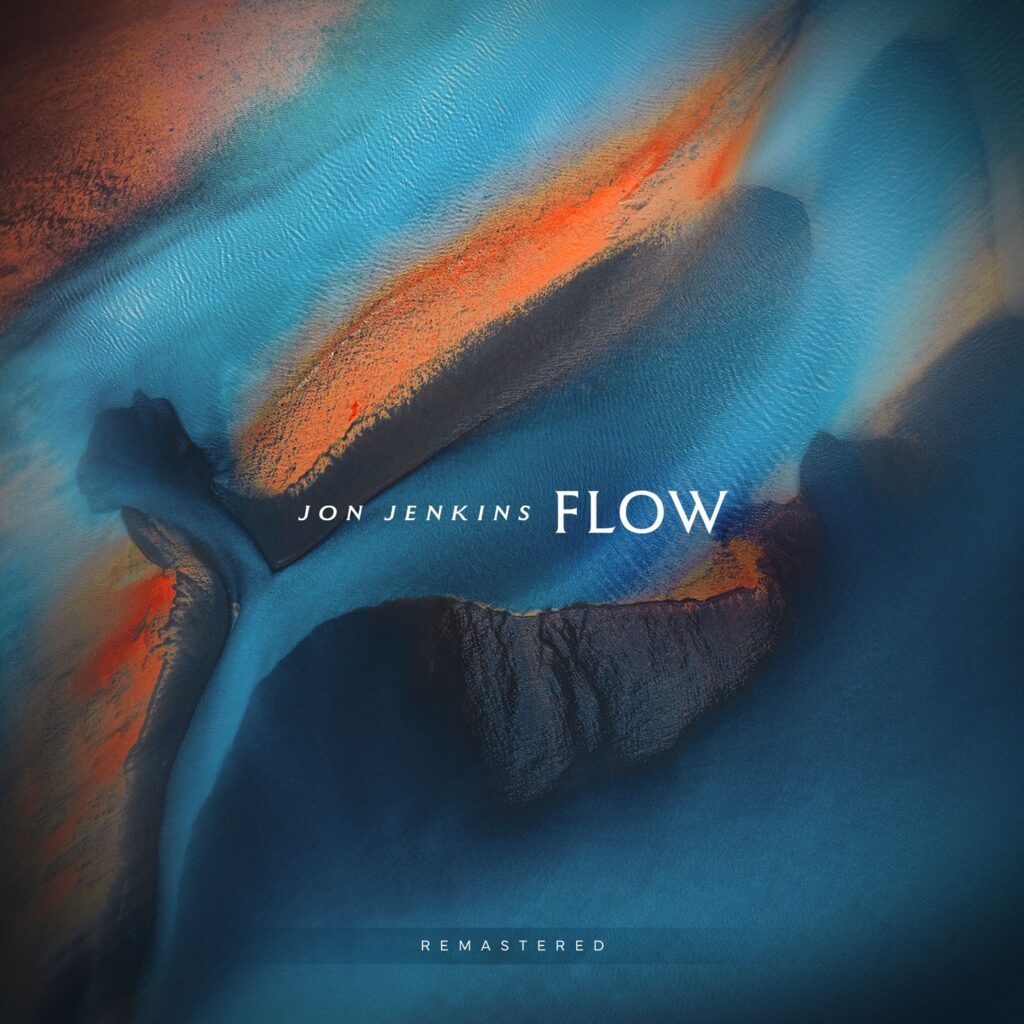
Today, we are reviewing FLOW (Remastered) by Jon Jenkins
Discovery & First Impressions
I know I’ve heard Flow several times throughout my past, though I’ll admit—it wasn’t during its original release. Despite being a lifelong fan of electronic and ambient music, there was a stretch of time—especially through the ’90s and early 2000s—where my exposure to this kind of sound was limited. The reasons are personal and not really important here, but I often describe that period as feeling somewhat “shielded away” from the music I truly wanted to experience and create.
Those were years when so much was happening in the world of ambient and cinematic sound, and I sometimes look back and feel as though I missed a great migration of inspiration. Perhaps that’s part of what drives my passion today—the desire to rediscover and reconnect with music that might have found me sooner in a different time. In many ways, I’m still catching up on lost time, both as a listener and a creator.
But enough about that—let’s focus on the now.
As you read through this review, you’ll notice that I often mention my listening setup, playback quirks, and technical interruptions that occur between tracks. Please don’t take those notes as criticisms of the music or of the artist—they’re not. They’re simply part of how I approach my reviews: as living experiences.
When I listen, I document what happens—emotionally, technically, even situationally—because I believe that kind of context breathes life into the process. Music isn’t just sound; it’s experience. The way we encounter it—through a player, a streaming service, or a vinyl needle drop—shapes how it moves through us. My reflections on those moments are not meant to detract from the music, but to offer a form of listening guidance—a reminder to all of us that how we listen matters just as much as what we hear.
And so, with Flow (Remastered), I set out not only to revisit an album I’ve long admired from afar, but to truly experience it in the way it was meant to be heard: as one continuous journey through sound, emotion, and motion.
About The Album
Flow (Remastered) marks the return of one of the true landmarks in modern ambient music. Originally composed and produced by Jon Jenkins, this reissue from Spotted Peccary Music breathes new depth and clarity into a work already considered by many to be a masterpiece of the genre. Jenkins, known for his cinematic approach and emotional subtlety, has long been celebrated for blending melodic sensibility with atmospheric immersion—and here, those qualities are revealed in greater dimension than ever before.
The remaster unfolds across eleven interwoven tracks spanning seventy-four minutes, each one designed to transition seamlessly into the next. This continuity is no accident—it’s a defining feature of Jenkins’ vision. As Billboard Magazine once described, his music hovers “between the quiet lyricism of Harold Budd and the expansive spacescapes of Steve Roach’s Structures from Silence.”* That balance between intimacy and vastness is what gives Flow its timeless magnetism.
Musically, the album sits at the intersection of ambient, cinematic, and instrumental rock traditions. Jenkins draws from a self-limited but lush sonic palette: gentle synths, shimmering piano themes, and subtle tribal percussion, all arranged with exquisite care. He’s joined by several exceptional collaborators—David Helpling, Jeff Pearce, and Howard Givens—whose ambient guitar textures add warmth, depth, and an almost oceanic sense of resonance.
Critics have long praised Flow as more than just an ambient album. It’s been called “relaxing, flowing, dream-imaged music” (Progression Magazine) and “a compelling intersection of cinematic electronics, instrumental rock, and spiritual ambient soundscapes” (Igloo Magazine). The music invites deep listening—an opportunity for introspection, imagination, and quiet emotional discovery.
Thematically, Flow is anchored in the metaphor of water—sound that ebbs, swells, and reflects. Every track moves like a current, balancing serenity and intensity in equal measure. From the opening pulse of “From the Spring” to the grand expanse of “Part of the Solution,” Jenkins creates a journey that feels elemental—both inward and outward, human and cosmic.
For this 2025 remaster, engineer Howard Givens revisited the original recordings at Spotted Peccary Studios, unveiling new detail and dynamic range without losing the organic warmth of the original. The result is a revitalized experience—one that retains the spirit of its era but sounds utterly alive in the present.
Whether discovered for the first time or revisited after years of memory, Flow (Remastered) stands as an invitation to listen deeply—to let the music move through you rather than simply around you. It’s not background; it’s a living environment of sound, one that rewards every moment of attention.
Track-by-Track Reflections
With all of that in mind, it’s time to step into the current itself. Albums like Flow aren’t simply collections of tracks—they’re journeys, meant to be experienced as one unbroken arc. Every sound feels deliberate, every transition purposeful, each moment feeding into the next like tributaries merging into a greater river.
As I began my own listen through the Remastered edition, I quickly realized this wasn’t just a sonic upgrade—it was a restoration of intent. The subtle interplay between instruments, the pacing, the dynamic breath of the mix—all feel renewed and freshly revealed.
So, take a deep breath. Let go of the expectation of “songs” and think instead of movements, of states of being. Let the edges blur between one and the next. That’s where the true beauty of Flow lies—in its continuity.
And before we begin, I should say this: some may find my reviews a bit on the wordy side—and this one, in particular, certainly runs longer than most. But that’s by design. When I do a review, I do a review. I express everything I feel about the release. I don’t skip over details that matter, because every note and nuance has its own weight. If there’s something wonderful, I celebrate it. If there’s something that distracts, I explore why. My goal isn’t to fill space—it’s to bring the context, the emotion, and the experience of the music to life. I aim for quality, not quantity.
Even though I’ve written quite a few of these lately, I still take the time to listen deeply, to reflect, and to translate what I feel into words the artist themselves might “hear.” That’s the essence of what Reviews from the Aural Realms is about—turning the act of listening into a shared, living conversation.
We begin, fittingly, From the Spring.
1. From The Spring (Remastered)
The album opens with “From The Spring,” an evocative awakening that feels both ancient and new. Thumping, heartbeat-like percussion grounds the listener immediately—an organic pulse that suggests something stirring beneath the surface. Over this, what first seems to be the distant song of whales drifts through the mix, yet closer listening reveals it might just be David Helpling’s signature ambient guitar work—liquid and expressive, singing with the same depth and mystery of the sea.
Soft, airy whispers sweep through like wind over water, and slowly, lush pads unfold—broad, shimmering textures that seem to breathe in unison with the rhythm. The track builds patiently, drawing you inward, until a succinct melodic arpeggio emerges—a delicate motif dancing lightly above the depths.
When the delayed echoes of that arpeggio begin to ripple outward, the soundscape takes on a meditative radiance. Each note trails off like light refracting through mist, a sonic signature I truly cherish in Jenkins’ work. “From The Spring” feels like the birth of motion itself, a quiet surge of renewal that perfectly sets the tone for the journey ahead.
2. Into A World Of Wonder (Remastered)
The journey continues seamlessly as tribal percussion returns to guide us “Into A World of Wonder.” Its rhythmic foundation feels both primal and timeless—an echo of distant ceremonies carried across unseen plains. Above it, a delicate ambient piano unfolds, each note like a drop of starlight falling into still water.
That melody—familiar, nostalgic—awakens something deep within memory. I suddenly recall hearing this very track years ago on one of the late-night ambient stations that used to fill my room with sound and solitude. Back then, I didn’t know the artist by name, but the music lingered, embedding itself among memories of quiet stargazing sessions, the soft hum of electronics, and the feeling that the universe was somehow listening back.
Around the three-minute mark, a more pronounced rhythm begins to take shape—a heartbeat expanding, gaining confidence—before it gently recedes again, like waves returning to the shore. It’s a fleeting pulse of energy, perfectly restrained, allowing the piano and pads to reclaim the foreground in a graceful fade.
“Into A World of Wonder” is more than a song—it’s a rediscovery, a moment where sound bridges the distance between past and present. I knew instantly it would find its way back into my personal playlist, where it truly belongs.
3. Flow (Remastered)
We then flow seamlessly into the title track, though here lies one of the few heartbreaks of the modern streaming era. Flow was originally conceived as part of a larger, continuous suite—each section gently merging into the next like the unbroken surface of a river. But streaming platforms, bound by metadata and algorithms, rarely allow for long-form musical journeys. Artists are often forced to “splice” their compositions into isolated tracks so the system can categorize, shuffle, and “recommend” them.
The result? That tiny, unintended pause between tracks—a momentary interruption that pulls the listener out of the current. It’s not a fault of Jon Jenkins, nor of the ever-artful Spotted Peccary label. It’s simply a limitation of the format, an artifact of convenience over continuity. On CD or vinyl, these divisions were only markers—signposts along a single sonic voyage. Now, they risk feeling like interruptions in a meditation.
But once you let yourself sink back into Flow, the beauty returns effortlessly. This piece is alive with movement—a gradual acceleration that feels organic, like water gathering speed as it finds its path downhill. You can hear it most clearly in the arpeggiated sequence, which subtly increases in tempo as the piece unfolds. Whether by design or by intuition, that rising pulse mirrors the natural build of emotion—gentle momentum giving way to release.
By the third section, the rhythm locks into a measured equilibrium, steady yet free, allowing shimmering plucked tones to dance atop the surface like sunlight glinting on ripples. It’s a moment of both precision and serenity—a musical embodiment of what Jenkins does best: the effortless motion between stillness and propulsion.
4. Night Drifting Through Black Canyon (Remastered)
The pace slows once more as we enter “Night Drifting Through Black Canyon.” The title alone paints a vivid picture—moonlight tracing the edges of sheer cliffs, the soft echo of water below, the world hushed in reverent stillness. Jenkins captures that atmosphere perfectly, guiding us through darkness not as something to fear, but as a place to drift—unhindered, unbroken.
The track opens with a gentle ambient foundation, layers of deep resonance that seem to move at the pace of breath. Floating within are subtle threads of guitar, this time from Jeff Pearce, whose textures almost resemble long, mournful calls that rise and fall across the soundscape. Whether intentional or not, it evokes the same oceanic tranquility that surfaced earlier in “From The Spring.” It’s as though the music itself remembers that opening moment, echoing it here beneath the canyon stars.
Perhaps my mind is playing tricks—hearing whale song before where there might be none— voices here. In truth, this is just part of the magic of Jenkins’ work. His sonic landscapes invite personal interpretation, allowing the listener’s imagination to color in the spaces between tones. The sound doesn’t insist—it suggests, leaving the mind free to wander.
This is music you don’t analyze, you inhabit. It’s the kind of piece that asks nothing of you but time—to sit, to breathe, to drift. Nothing breaks the spell. There are no sharp edges, no sudden cuts, just the sensation of gliding through the still air of night, carried by the gentle current of sound. In an age defined by constant interruption, “Night Drifting Through Black Canyon” is a welcome surrender to continuity.
5. Cross Over (Remastered)
We now move—or perhaps “skip”—into “Cross Over.” Once again, the limitations of digital playback make themselves known; the illusion of continuity momentarily breaks, like a ripple across still water. It’s a fleeting disruption, but one that reminds me why albums like Flow were meant to be experienced as a single, uninterrupted journey. I’m already making a mental note: this is one I need to own on CD, so I can finally let it play as intended—no cuts, no gaps, just pure immersion.
But the moment that melody begins, all annoyance dissolves. A warm, almost Wurlitzer-like piano emerges, glowing softly in the darkness. There’s something nostalgic about its tone—part music box, part dream. It feels both familiar and otherworldly, as if you’ve heard it somewhere long ago in a half-remembered life.
“Cross Over” quickly establishes itself as one of the album’s emotional anchors. There’s a tenderness in its phrasing, a subtle invitation to step beyond whatever divides your present from your past. Each chord seems to open a door into another space—fluid, gentle, and deeply human.
By this point in the album, Jenkins has fully mastered the balance between motion and stillness. Even when the flow is interrupted by the mechanics of modern listening, the music itself refuses to be broken. It continues beneath the surface, carrying you onward.
For me, this one might be the standout track so far—a perfect encapsulation of the album’s essence: serene, soulful, and endlessly flowing.
6. The Power / Washed Away (Remastered)
We transition now into the two-part piece “The Power / Washed Away,” a track that lives up to its duality—force and surrender, tension and release. The opening carries us forward with a surge of tribal percussion, pulsing with vitality and intent. Compared to the gentler rhythm of “Cross Over,” this movement feels almost confrontational—alive with energy, yet slightly overwhelming, as though the river we’ve been drifting along has suddenly found the rapids.
Around the 1:30 mark, an arpeggiated sequence begins to emerge, sparkling across the surface of the mix. It’s a welcome guidepost, a reminder of Jenkins’ melodic sensibility shining through the density. But by the three-minute mark, the percussion takes command again—a marching cadence, strong and resolute. There’s power here, no doubt, but perhaps too much. For my personal taste, it starts to overshadow the subtler textures beneath, the very details that make Jenkins’ work so immersive.
Interestingly, the rhythm in this section calls to mind the “Horizon” movement from Tangerine Dream’s Poland—that same insistent, almost hypnotic percussive momentum that both propels and engulfs. It’s not imitation, but rather a shared spirit—a reminder of that mid-80s era when electronic music danced at the edge of cinematic form.
Eventually, the storm eases. The percussion subsides into a steady heartbeat, and the piece drifts into the second half—“Washed Away.” Here, the tension dissolves, replaced by a soothing calm, a return to still waters. The contrast between the two halves is striking—almost symbolic. It’s as if the album momentarily tests the listener’s endurance, only to reward it with release.
By the end, everything fades into silence, the energy spent, the surface smooth once more. While the first section may have pressed too firmly against my own preferences, the resolution is deeply satisfying. It reinforces what Flow does so beautifully: it explores the balance between control and surrender, power and peace, motion and stillness.
7. Breathing In The Deep (Remastered)
And there it is again—that jarring track skip. Every time it happens, I wince. Depending on your listening method, some players handle the transition better than others—Spotify smooths it over decently—but when I review music, I prefer to use an external player like VLC so I can hear the music in its most direct form. Unfortunately, VLC doesn’t always buffer the next track quickly enough, so instead of floating from one world to the next, I’m pulled abruptly out of the current. It’s a minor technicality, but one that undeniably affects immersion.
The liner notes for Flow describe it perfectly: “Characterized by its lush, atmospheric textures and seamless movement between tracks.” And that seamlessness is absolutely there—it’s just hidden behind the walls of modern playback technology. Unless you’re listening to the CD or a continuous mix, that intended sense of uninterrupted motion is lost to the cut between digital files.
As both a listener and an artist, I understand this frustration deeply. I faced the same challenge with my own releases—most notably when I reissued The Maestoso Interstellar Suite as Infinity Volumes I & II. I had always envisioned a continuous listening experience, but the realities of streaming—file limits, metadata, platform restrictions—forced me to fragment it. In the end, I even titled the second part Singularities as a nod to that breakup in continuity. Perhaps it’s time I revisit that idea and include a bonus continuous mix, if only to preserve the intended journey.
But I digress.
Back to “Breathing in the Deep.” Once you settle into its world, this track unfolds into one of the album’s most captivating long-form pieces. It drifts with a patient pulse, breathing slowly, inviting the listener to do the same. The sound design here reminds me of Carbon Based Lifeforms—that same expansive sense of floating through unseen depths, where tone and texture become inseparable.
Midway through, a subtle unease emerges—a touch of detuned synthesis that adds tension without disrupting serenity. It’s as though we’ve reached a darker trench beneath the surface, where pressure and peace coexist. That complexity, that balance of beauty and slight discomfort, is what keeps me coming back to song specifically (I think I’ve listened to it 3 times in a row by now before moving to the next).
“Breathing in the Deep” is exactly the kind of immersive ambient composition I love most—long, evolving, and emotionally layered. It’s already found its place on my personal playlists, where it belongs in its natural state: unbroken, continuous, and infinite.
8. A Word With The Vine (Remastered)
Finally—no jarring cut. The transition into “A Word With The Vine” feels natural, fluid—exactly as it should. After the vast expanse of “Breathing in the Deep,” this short piece arrives like a quiet reflection at dawn, a moment to catch one’s breath.
At barely a few minutes long, it’s the shortest track on the album, but also one of its most intimate. A soft, sustained pad forms the foundation, while delicate string layers drift gently behind it like sunlight filtering through leaves. The melody itself—simple, slow, and tender—carries a subtle vibrato that feels alive, trembling slightly with emotion.
There’s something quietly sacred about this one. It doesn’t try to build or evolve—it simply exists, suspended in its own stillness. After so many expansive movements, “A Word With The Vine” serves as a gentle reminder that beauty doesn’t always require motion. Sometimes the flow pauses, not to break, but to allow the listener to listen inward.
It’s a fleeting moment, yes—but one that lingers long after it ends, like the final light before nightfall.
9. Blood And Water (Remastered)
“Blood and Water” begins with the same quiet grace as “A Word With The Vine,” extending that sense of calm into something deeper—more elemental. From the opening moments, soft arpeggiated tones ripple like the surface of a gentle stream, fluid and natural, carrying subtle harmonic shifts beneath the surface. It’s a delicate balance of sound and space—motion without urgency, flow without force.
Around the two-minute mark, the familiar tribal percussion returns, but this time it feels perfectly integrated—a heartbeat within the current rather than a force against it. The arpeggios swell in strength, as though the water has gathered momentum, carrying the listener along its winding path. Unlike “The Power / Washed Away,” the rhythm here complements rather than commands, allowing every melodic texture to breathe.
Then, as we cross the four-minute mark, the energy gently recedes. The percussion dissolves back into the depths, leaving only that shimmering arpeggiated flow, pure and unbroken. It’s a return to stillness, but not to silence—it’s continuity restored.
There’s something profoundly satisfying about this piece. It feels like a reconciliation of contrasts explored earlier in the album—force and surrender, rhythm and repose. Jenkins lets both coexist here without conflict, demonstrating a matured confidence in pacing and texture.
As we move toward the final chapters of Flow (Remastered), “Blood and Water” serves as a kind of spiritual center point, a moment of alignment before the journey’s closing drift. It reminds us that flow isn’t only about motion—it’s about the spaces between where balance quietly returns.
10. Part Of The Solution (Remastered)
We arrive at the longest and perhaps most ambitious composition on the album, “Part of the Solution.” Spanning more than ten minutes, it feels like the culmination of everything Flow has been building toward—a piece that embodies not just Jenkins’ command of atmosphere, but his patience, his restraint, and his sense of scale.
From the outset, a subtle pulse carries us forward, guiding the listener deeper into this evolving soundscape. Just past the 1:30 mark, darker tones begin to stir beneath the surface—shadowy pads creeping in, lending a mysterious gravity to the piece. The shift is delicate yet deliberate, expanding the emotional palette from light into a more complex twilight space.
As the composition unfolds, it grows majestically, layers rising and intertwining with effortless grace. Around the four-minute mark, the energy softens, giving way to a more reflective passage where the pads take on an almost oboe-like timbre, smooth and breathy, evoking the sensation of exhalation after ascent. This section feels like meditation in motion—tranquil, luminous, and deeply grounding.
By eight minutes in, darker textures begin to re-emerge—familiar currents returning to the fold. The momentum gathers once more, driven by tribal and cinematic percussion that builds in both power and scope, leading to a crescendo of resonant piano chords. It’s a breathtaking moment—not a sudden explosion, but a steady expansion, like dawn pushing against the horizon.
What’s remarkable here is how seamlessly Jenkins handles these transitions. The music never startles; it moves—fluidly, gracefully—through its phases. You don’t leave the song; you travel with it. And that’s precisely the mark of a composer in full command of emotional pacing.
As the crescendo subsides, the piece eases back into a gentle trance state, mirroring its beginning but with greater depth—like a river returning to stillness after the flood. Finally, it fades into silence, leaving a profound sense of resolution.
“Part of the Solution” isn’t just a song—it’s the journey within the journey, the embodiment of Flow’s entire ethos. It reminds us that every passage—light or dark, still or powerful—is part of something larger, and that the beauty lies not in reaching the destination, but in moving through it.
11. Ebb (Remastered)
The journey begins its closing descent with “Ebb,” a fittingly titled coda that serves as the true emotional release of the album proper. From its first notes, there’s an unmistakable sense of stillness—a slow exhale after the climb of “Part of the Solution.” The opening unfolds gently, built on soft layers of ambient tone that feel suspended in twilight. It’s less a song and more a quiet return to the infinite—the same flow that began From the Spring now easing into its final retreat.
Hearing this again, I can’t help but feel a deep sense of déjà vu. I’m certain Ebb was one of the pieces I heard long ago, possibly during one of those late-night broadcasts of Musical Starstreams or another syndicated ambient radio show that kept me company under the stars. I didn’t know the name or the album back then—but the feeling was unmistakable. It’s the sound of memory, resurfacing like a tide that never truly left.
The piece itself is reflective, serene, and deeply conclusive, the perfect summation of Flow’s larger narrative. Jenkins crafts a space that feels both intimate and expansive—a slow drift through familiar currents one last time. The long fade-out at the end is masterful: it doesn’t end so much as it dissolves, as though the music continues somewhere beyond the range of hearing.
And then, silence. A full twenty seconds or more of intentional quiet. It’s as if the album wants to give you a moment to process what’s just transpired—to sit in the stillness before you move on. It’s rare to hear an artist allow that kind of breathing room anymore, and it’s a choice I truly admire.
“Ebb” isn’t simply the end of Flow—it’s the completion of its cycle. After all the motion, rhythm, and reflection, we return to where we began: sound as water, movement as meaning, and silence as the final note.
12. Into A World Of Wonder (Remastered Single)
The remastered album concludes with the single version of “Into a World of Wonder,” serving almost like a mirror held up to the beginning of the journey. It’s a reminder of how it all started—those familiar melodies and gentle rhythms now reframed in a slightly different light.
At first listen, there aren’t too many major differences between this single mix and the album version, and that’s perfectly fine. What does stand out, though, is the ending. The single version cuts off a few seconds earlier, a decision that makes perfect sense for radio or standalone listening. Unlike its placement within the album’s continuous narrative—where it flows seamlessly into the title track “Flow”—this one is designed to stand on its own.
That difference may seem subtle, but it perfectly encapsulates one of the ongoing themes I’ve reflected on throughout this review: the balance between flow and interruption. Here, the transition into “Flow” is absent, leaving the piece to conclude in solitude. It’s not worse, merely different—a self-contained world of wonder rather than a passage between movements.
It’s a fitting postscript to the remaster, offering both a nod to the album’s origins and a reminder of how much context shapes our listening experience. Whether heard as part of the whole or as a singular moment, “Into a World of Wonder” evokes that sense of awe and timeless beauty that may have captured our attention all those years ago. And still does.
Final Thoughts
I truly like this album—more than that, I respect it. Listening again, I realized that I’d heard Flow before, years ago, without ever truly knowing it. Back then, the music found me in fragments—through late-night radio, ambient mixes, and stray moments of wonder. Hearing it now, in its remastered form, feels like finally meeting an old friend I’d only ever spoken to in dreams.
As I’ve said throughout this review, albums like Flow aren’t meant to be broken into pieces. They’re designed as continuous experiences, as living environments of sound. For that reason, I wholeheartedly recommend getting the CD edition if you can, or purchasing the studio master WAVs and splicing them together yourself. That’s exactly what I plan to do—so the transitions remain seamless and the journey uninterrupted.
It would be wonderful if releases like this came with an option to download a single extended file, preserving the uninterrupted flow as it was originally intended. In the streaming era, where algorithms carve long-form works into digestible fragments, that kind of respect for continuity feels rare—and precious. Jenkins’ work deserves that kind of preservation.
This album also reminded me to revisit something in my own catalog—Infinity Volumes I & II—and consider providing a continuous mix there as well. Music like this deserves space to breathe, to unfold, to simply be.
Flow (Remastered) is a triumph of atmosphere, patience, and emotional honesty. Jon Jenkins, along with David Helpling, Jeff Pearce, and Howard Givens, has created something that transcends background music—it’s an invitation to inhabit sound, to drift, reflect, and feel. Every note serves a purpose. Every silence means something.
In the end, Flow isn’t just an album—it’s a philosophy. It’s about motion and stillness, connection and continuity, the awareness that the smallest transition can carry the deepest meaning. Whether you’re discovering it for the first time or returning after years away, you’ll find that Flow doesn’t simply play through speakers—it moves through you.
About the Artists




Trying to define Jon Jenkins’ music with a single label is a futile task. Is it electronic, ambient, cinematic, new age—or something else entirely? In truth, it’s all of these and more. Jenkins creates soundscapes that transcend genre, carrying listeners beyond the boundaries of style and into worlds of imagination and emotion. For him, music isn’t just sound—it’s a journey. “I’ve always loved how great music can spark the imagination,” he reflects. “It opens a door to another place in your mind.”
Jenkins first made his mark with albums like Flow, Beyond City Light, and Continuum (with Paul Lackey), each one revealing a composer with a gift for combining melodic elegance and atmospheric depth. But it was his celebrated trilogy of collaborations with David Helpling—Treasure, The Crossing, and Found—that elevated his name to legendary status within the ambient and cinematic music community. Together, the duo earned five Zone Music Awards and worldwide acclaim, their work praised for its emotional scope and transcendent beauty.
Throughout his career, Jenkins’ music has appeared in Amazon’s Top 10 lists, received Billboard Magazine’s Critic’s Choice honors, and won multiple Album of the Year awards in both the Ambient and Electronic categories. The nationally syndicated Echoes Radio program (heard on NPR stations across the United States) has consistently recognized his albums among the most influential of the past two decades. Beyond critical success, his compositions have found homes in film trailers, television broadcasts, and even Olympic coverage, underscoring the universal resonance of his sound.
Blending cinematic electronics with rock energy and ambient subtlety, Jenkins crafts music that is powerful yet sincere, vast yet intimate. Every release feels like a guided voyage—one that invites you to slow down, breathe, and rediscover wonder through sound.
With a catalog that continues to inspire listeners worldwide, Jon Jenkins stands as a distinctive voice in modern instrumental music—an artist whose creations don’t just play in the background, but open gateways to other worlds entirely.
Learn more and explore his work at Spotted Peccary Music.
✨ Want Your Music Reviewed? ✨
Reviews from the Aural Realms is all about spotlighting music that deserves to be heard. If you’re an artist who’d like to see your music featured in a future review, I also offer detailed review services on Fiverr — including promo clips for social media.
One thought on “FLOW (Remastered) by Jon Jenkins”